Understanding Winching and Ditch Extraction Regina
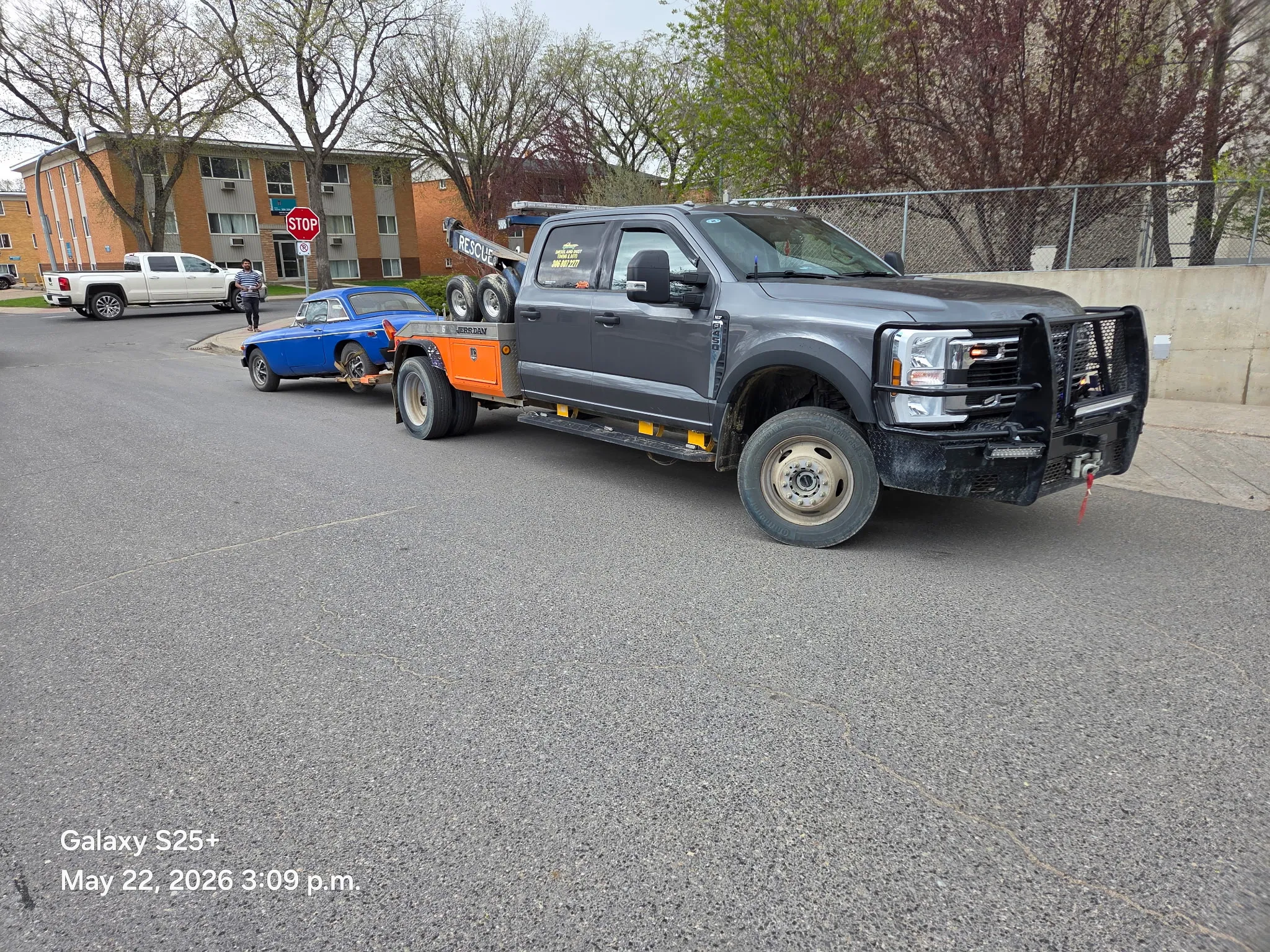
In Saskatchewan, we experience some of the most challenging driving conditions in Canada. From deep winter snowdrifts to spring thaw mud, getting stuck is an eventuality for many Regina drivers. When a vehicle slides off the pavement on the Ring Road or a rural grid road near Balgonie, simple towing is off the table. You need winching and ditch extraction Regina specialists who understand rigging geometry and soil mechanics to safely retrieve your vehicle without causing secondary frame or suspension damage.
1. Soil Mechanics and Resistance: Why Cars Get Stuck
When a vehicle leaves the road, it encounters different resistance factors depending on the terrain. In winter, snow acts as a massive wedge, packing under the chassis and lifting the wheels, which removes all traction. In spring, Saskatchewan's clay-rich soil turns into thick mud, creating a suction effect around the tires. Extracting a vehicle from these situations requires calculating the "total resistance," which includes the weight of the vehicle, the angle of the slope, and the soil drag coefficient. A professional tow truck Regina operator will calculate this resistance to choose the correct winching line and pulley system.
2. Rigging Geometry: The Power of Snatch Blocks
One of the most critical tools in professional roadside assistance Regina is the snatch block (a heavy-duty pulley). If a vehicle is stuck at a sharp angle to the road, winching directly can bend steering linkage or pull the vehicle sideways into obstacles. By anchoring a snatch block to a stationary object or using a multi-point rigging setup, the operator can redirect the pulling force. This doubles the winching capacity of the truck and ensures a straight, controlled line of pull that protects the vehicle's steering and frame geometry.
3. Frame Hook-Ups vs. Suspension Points
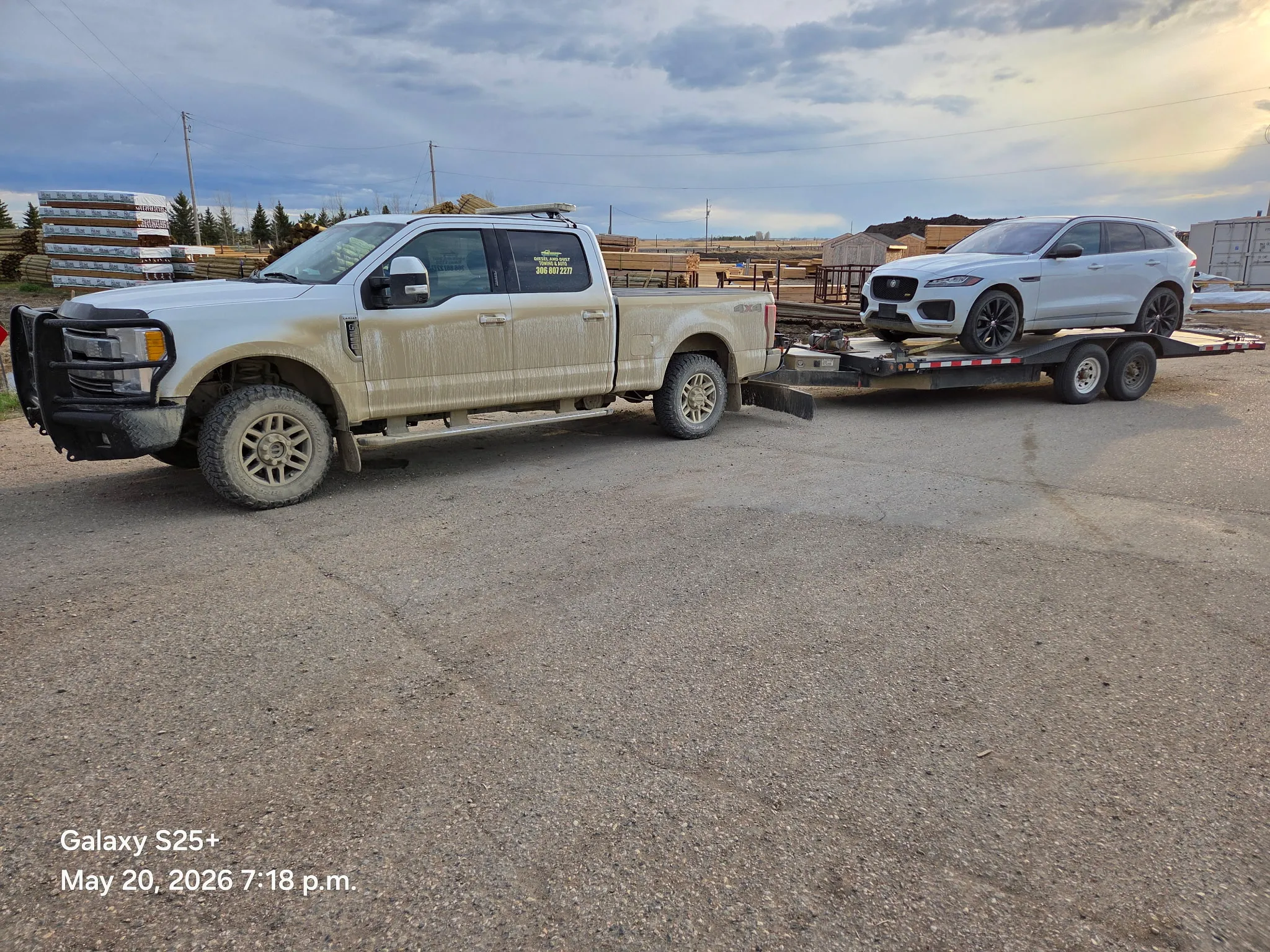
A common mistake made by amateur recovery efforts is attaching chains or straps to suspension control arms, axles, or bumpers. Modern vehicles feature crumple zones and lightweight aluminum components that easily bend under tension. Professional recovery operators only hook onto certified frame tie-down points, tow hooks, or use specialized "bridles" that wrap around the tires. This ensures the pulling force is distributed through the strongest structural members of the vehicle.
4. Safety Zones During a Winch Operation
Winch lines hold a massive amount of kinetic energy. If a steel cable or synthetic line snaps under load, it can lash back with lethal force. A key safety protocol during any ditch extraction Regina operation is maintaining a "clear zone"—a radius equal to 1.5 times the length of the extended winch line. All bystanders must stand behind the tow truck or far out of the line of pull. Professional operators also use cable dampers (heavy blankets placed over the line) to absorb energy and drop the cable safely to the ground if a failure occurs.
Conclusion: Trust the Regina Recovery Specialists
Winching and ditch extraction are complex operations that demand specialized training and heavy-duty equipment. If you find your vehicle stuck in a ditch, do not risk damage by trying to pull it out with a personal truck and tow strap. Call the recovery experts at Diesel and Dust Towing & Auto. Our team operates 24/7, providing safe, calculated, and damage-free winching across Regina, White City, Balgonie, and surrounding areas. Contact us at (306) 807-2277 for prompt assistance.
Diesel and Dust Towing & Auto Team
Professional Recovery Specialists
Regina's leading authority on safe vehicle transport and roadside recovery. Our team brings decades of combined experience to the Saskatchewan roads, ensuring every driver gets home safely.
Continue Reading
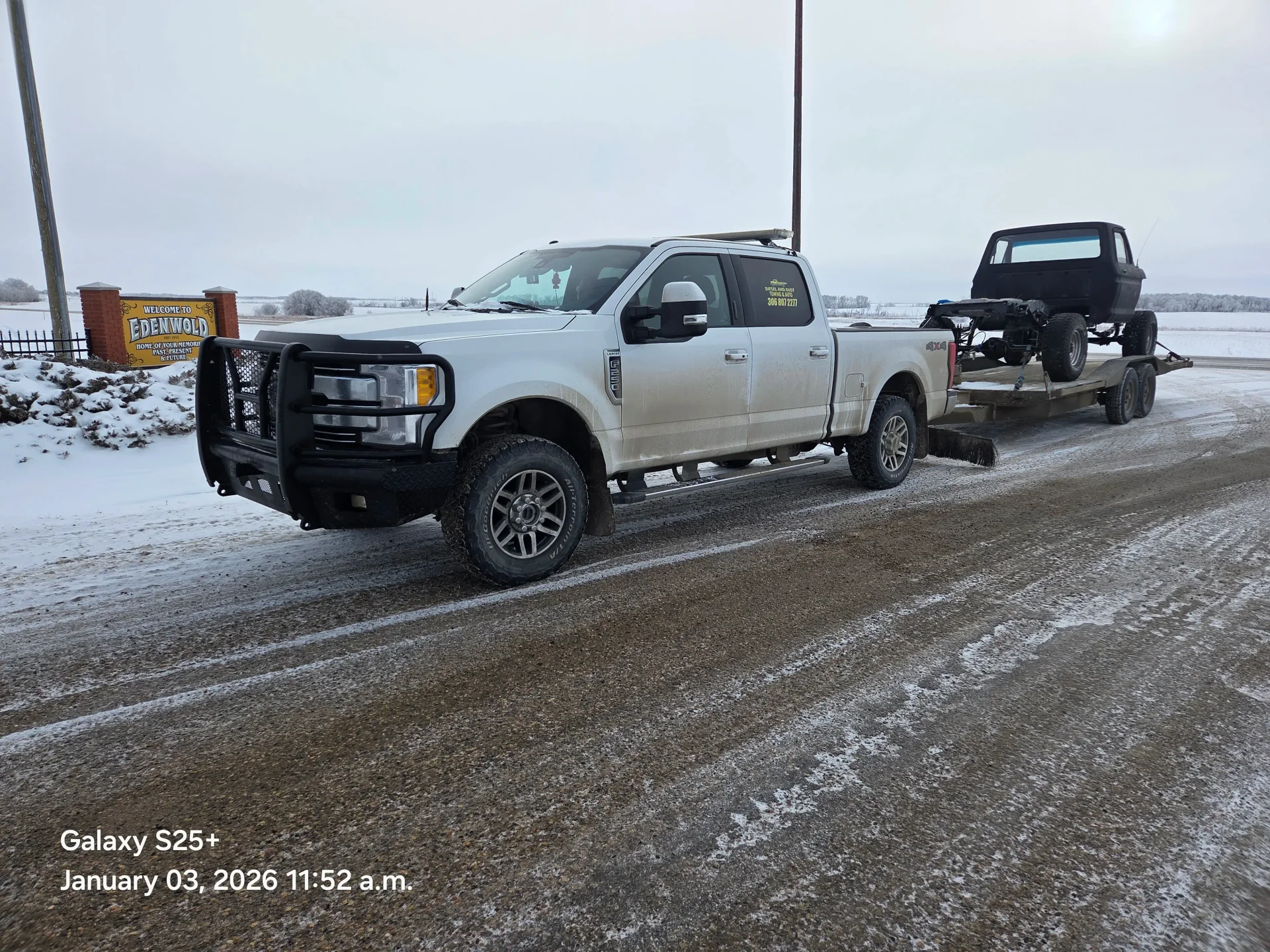
Winter Roadside Safety Regina
Surviving a vehicle breakdown in a Saskatchewan winter requires more than just a warm coat. Learn the technical safety protocols every Regina driver needs.
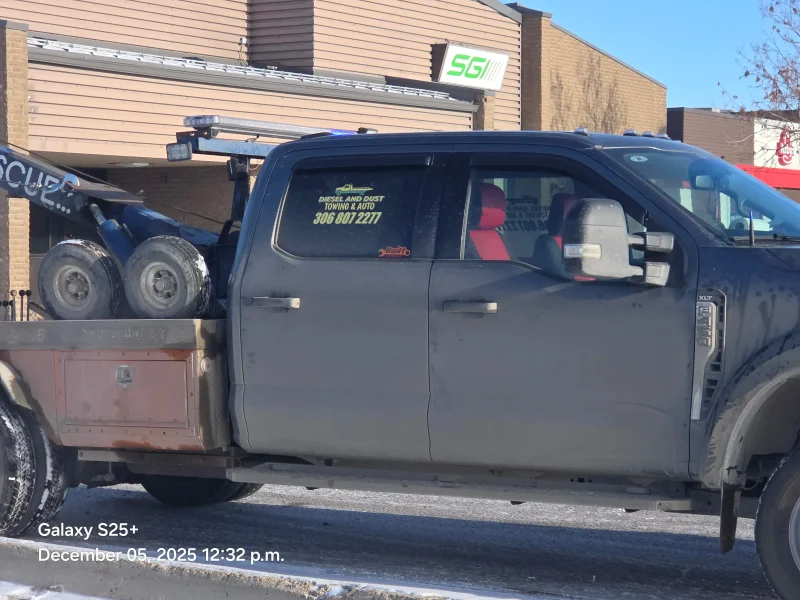
Collision Recovery Regina Ring Road
An accident on the Ring Road or Pasqua Street is high-stress. Follow this step-by-step recovery guide to manage the scene safely.